In implant-supported rehabilitation, precision is not an option—it is a biomechanical necessity. However, there is a critical gap between the digital world and the patient’s mouth that many laboratories and clinics often overlook.
The “Light Buckling” Effect in Full Arches
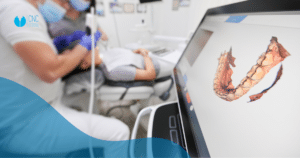
The intraoral scanner is an exceptional tool, but it has a physical limitation: light-based capture. When digitizing a full arch or large structures, the software must “stitch” together thousands of images. This process can generate micro-deformations or torque errors that are impossible for the human eye to detect on a screen, but which the metal definitely “feels.” Not even a laboratory desktop scanner can guarantee absolute passive fit on its own.
The Problem: If the original STL file contains an error of just a few microns, due to surface reflections on the model, poor data capture, or improper calibration, the milled structure will arrive at the clinic with internal stresses. This compromises the osseointegration of the implants because the scanner has digitized that inherent error.
To avoid these technical inaccuracies, modern scanners are evolving by combining different technologies, such as metrology and photogrammetry. In fact, the hybrid use of light and photography to determine implant positioning is delivering exceptional reliability.
Our Solution: Validation via Tactile Probing
At CNC Dental, we have designed a workflow that acts as a relentless quality control. We don’t just “print” what we receive; we validate the actual position of every single connection.
-
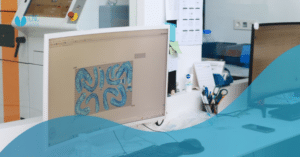
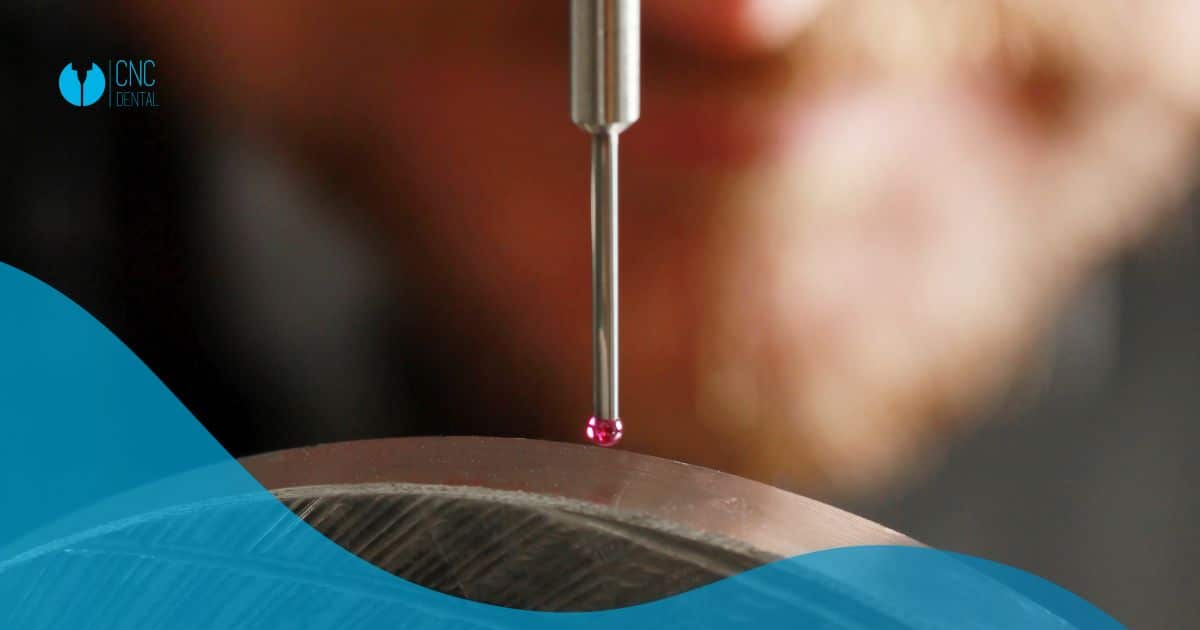
Mechanical vs. Optical Precision: While light can bounce imprecisely off scanbodies, our tactile probes physically measure the center of the connection using a ruby-tipped stylus. By using physical and mechanical measurement, we eliminate optical variables.
-
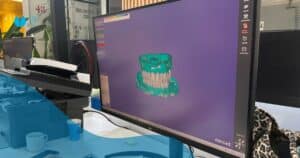
Correction at the Milling Center: If we detect that the optical reading from the intraoral scanner deviates from the actual physical position, we correct the design in the software before starting the milling process in Titanium or Chrome-Cobalt.
-
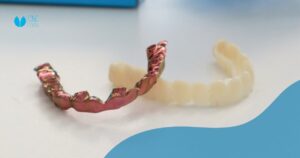
Guaranteed Passive Fit: This double-check ensures the framework seats perfectly without the need for “force-fitting,” emergency cutting, or welding before being sent to the clinic.
Real Benefits for the Clinical Workflow
Designing highly complex structures (bars, implant bridges, or hybrids) under this tactile metrology standard offers direct advantages:
-
Elimination of Stress: We protect the implant-bone interface by ensuring a completely passive seating.
-
Time Efficiency: No more repetitive “trial and error” appointments caused by ill-fitting structures.
-
Long-term Reliability: We reduce the risk of screw loosening or ceramic fractures caused by mechanical stress.
Conclusion: Technology with Technical Criteria
At CNC Dental, we combine the potential of your digital capture with the security of physical measurement. We are your technological partner, taking your rehabilitations to the next level.